Omen bearers
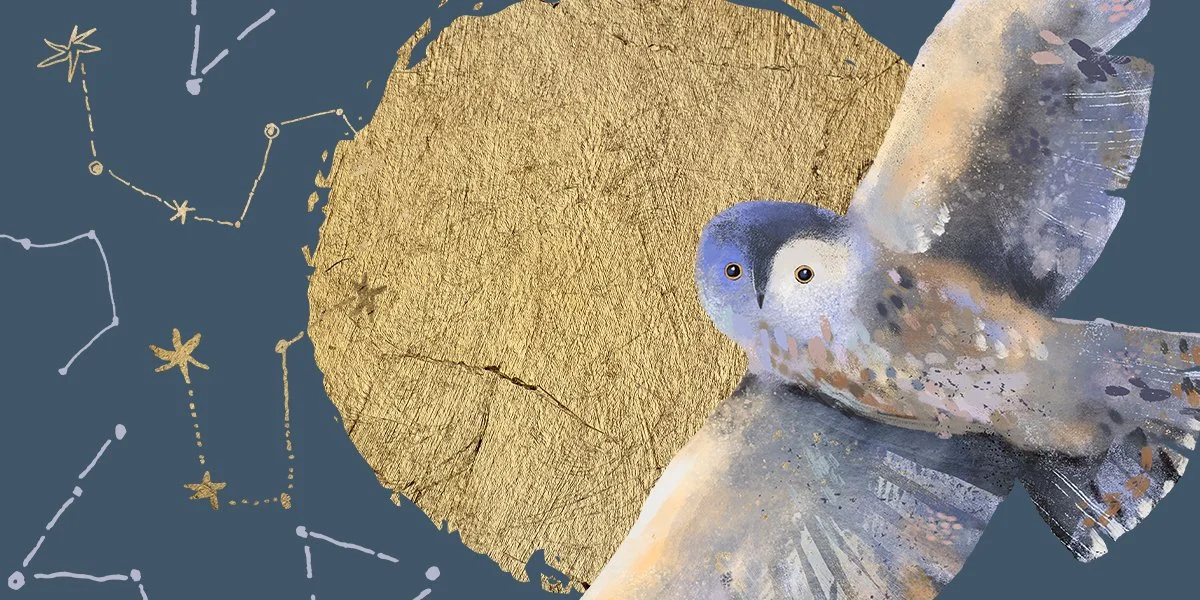
“As for omens, there is no such thing as an omen. Destiny does not send us heralds. She is too wise or too cruel for that.”
-Oscar Wilde
Owls dwell in the precipice between dusk and dawn.
Because of their mysterious nature and biology, they are deeply rooted symbols in mythology across the world and as far back as 30,000 years ago in the earliest cave paintings in France.
When I see or hear an owl, it feels like a blessing or a good omen. So I was surprised in my research to find that they were not always regarded as such.
In Mesoamerica, the Aztecs believed hearing an owl foretold something dire.
In Chinese traditions, owls were believed to be bad luck.
The Romans feared owls. Pliny the Elder in Naturalis Historia wrote that owls “foretell nothing but evil.”
As with all things, where we find bad, we also find good.
There are varying beliefs in the Indigenous North American nations. For Plains and Southwestern tribes, owls are messengers from the spirit world, while for the Pawnee, owls are protective spirits.
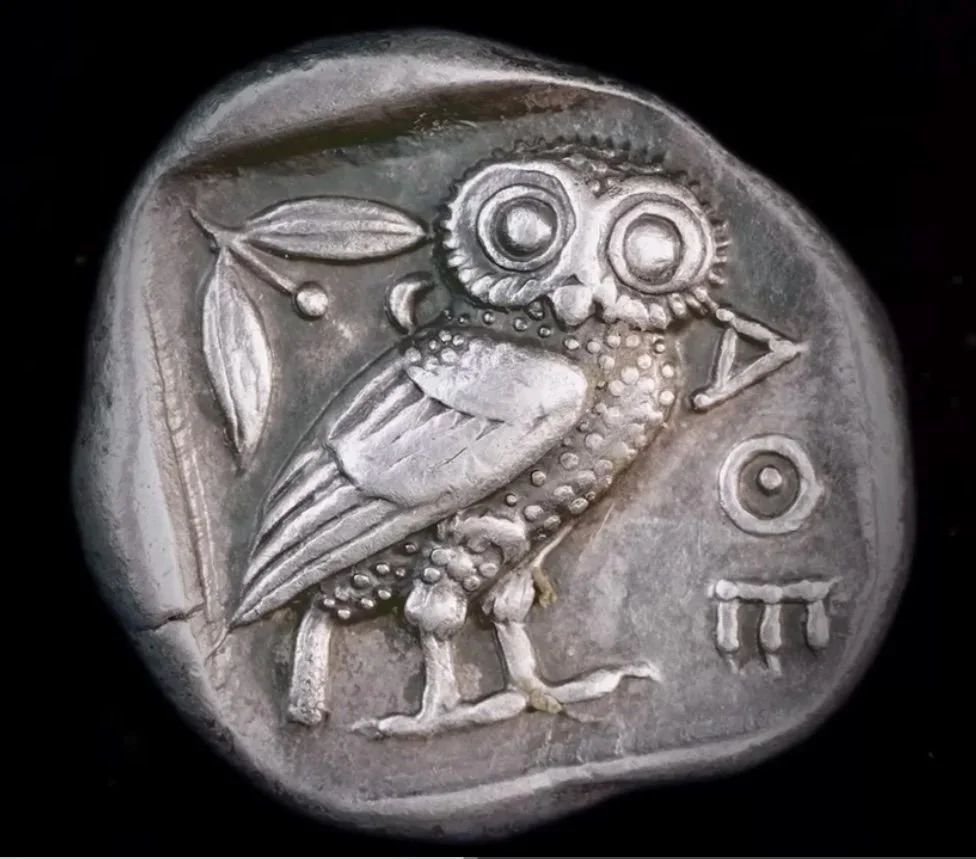
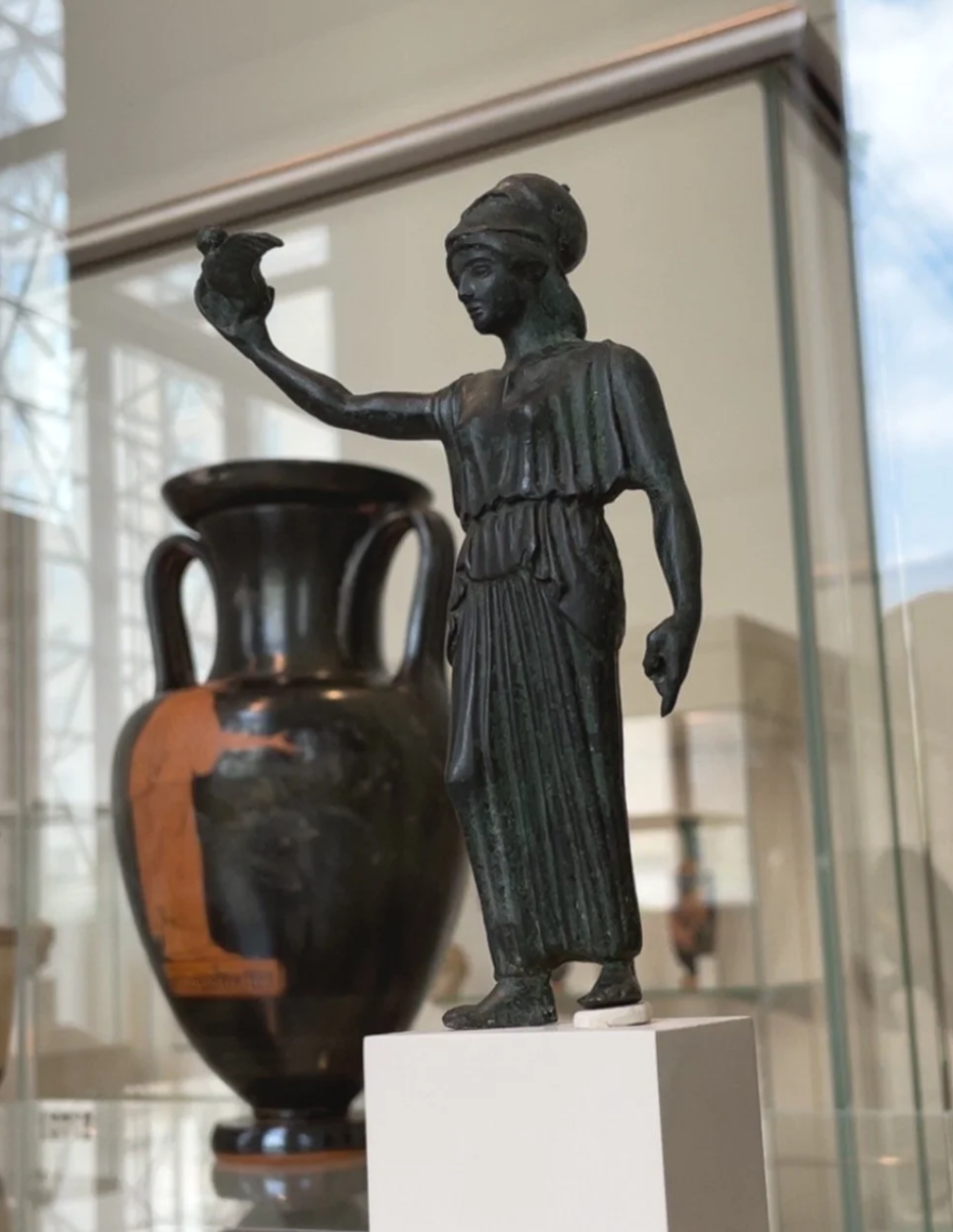
Owls were sacred to Athena the Greek goddess of wisdom. Unearthed, archaic coins display little owls which were considered good omens given before battle.
The Greeks also believed the owl’s ability to see at night was a metaphor for seeing truth in the dark.
Other cultures associate the night dwellers with the dead because, before modern burials, corpses attracted mice which attracted owls.
But it is important to note that not every culture interprets death and the afterworld negatively.
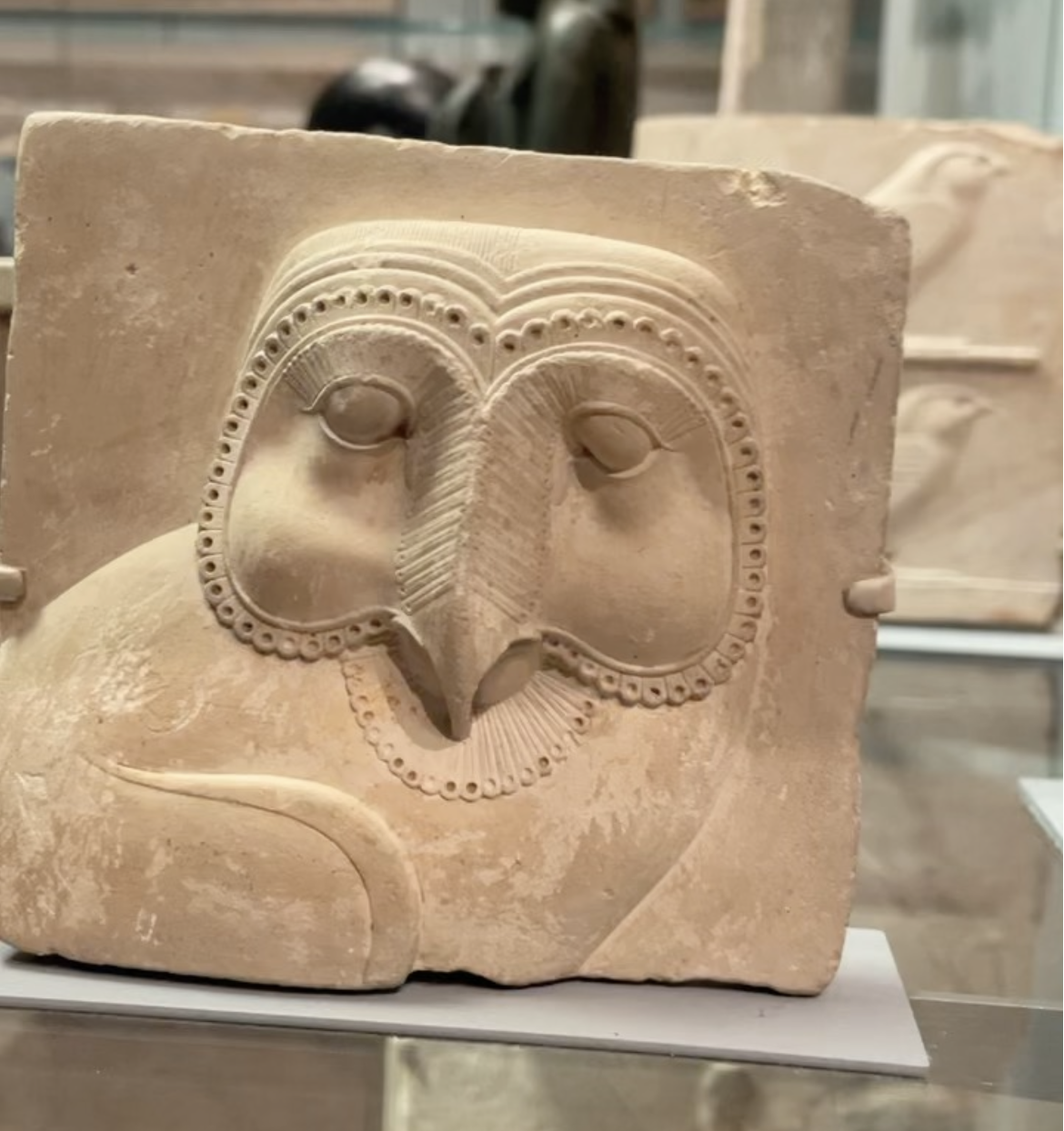
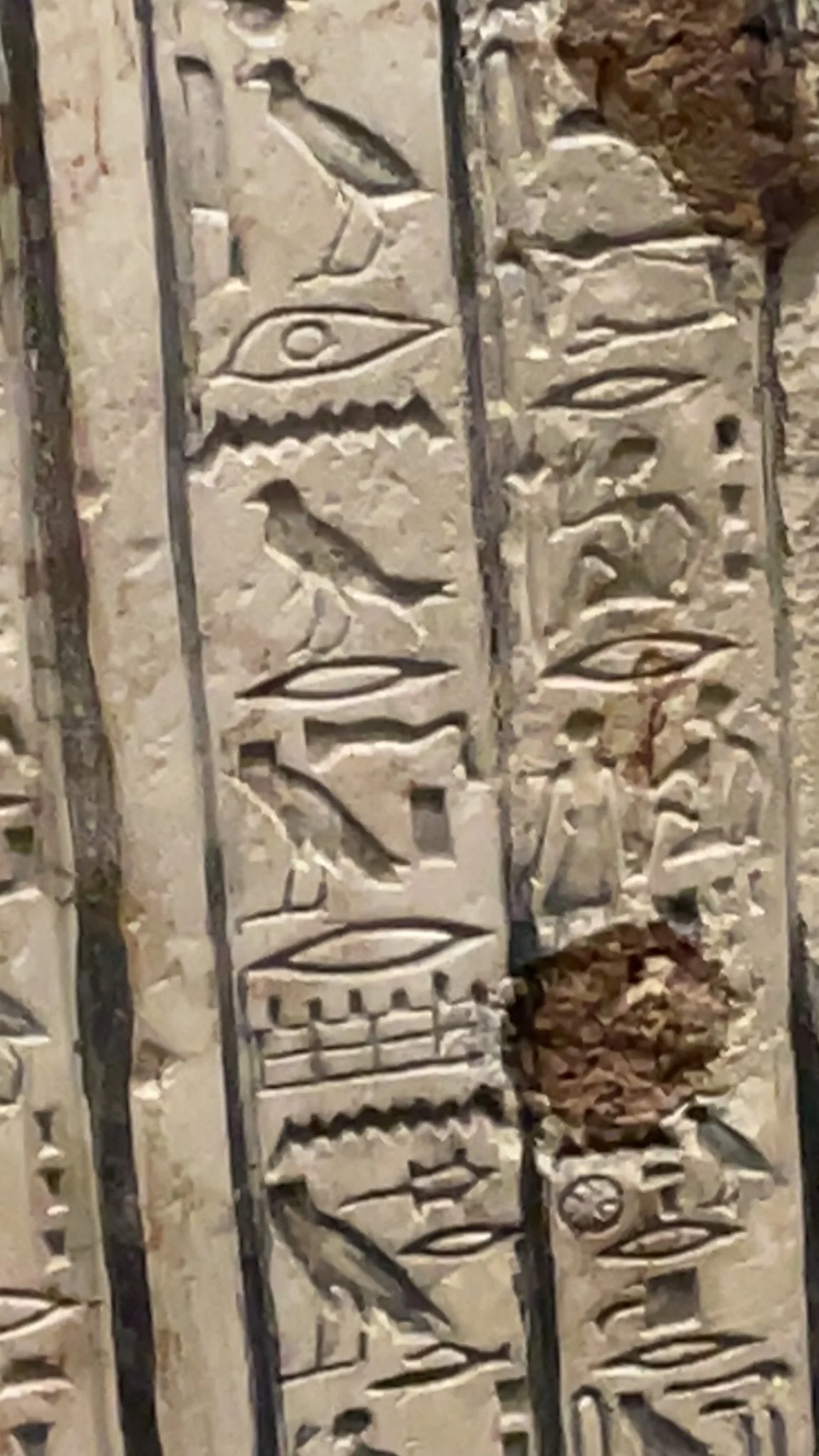
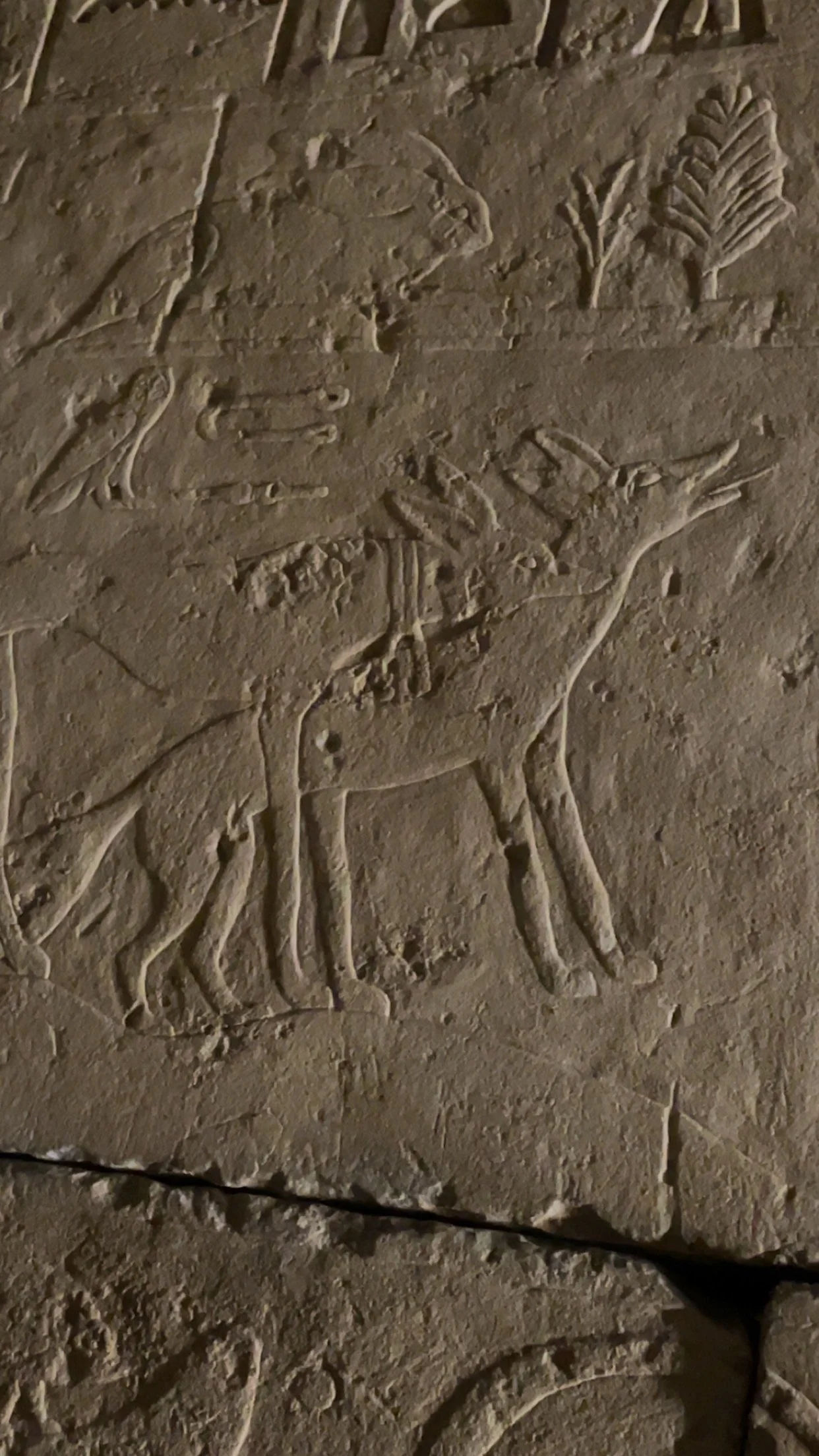
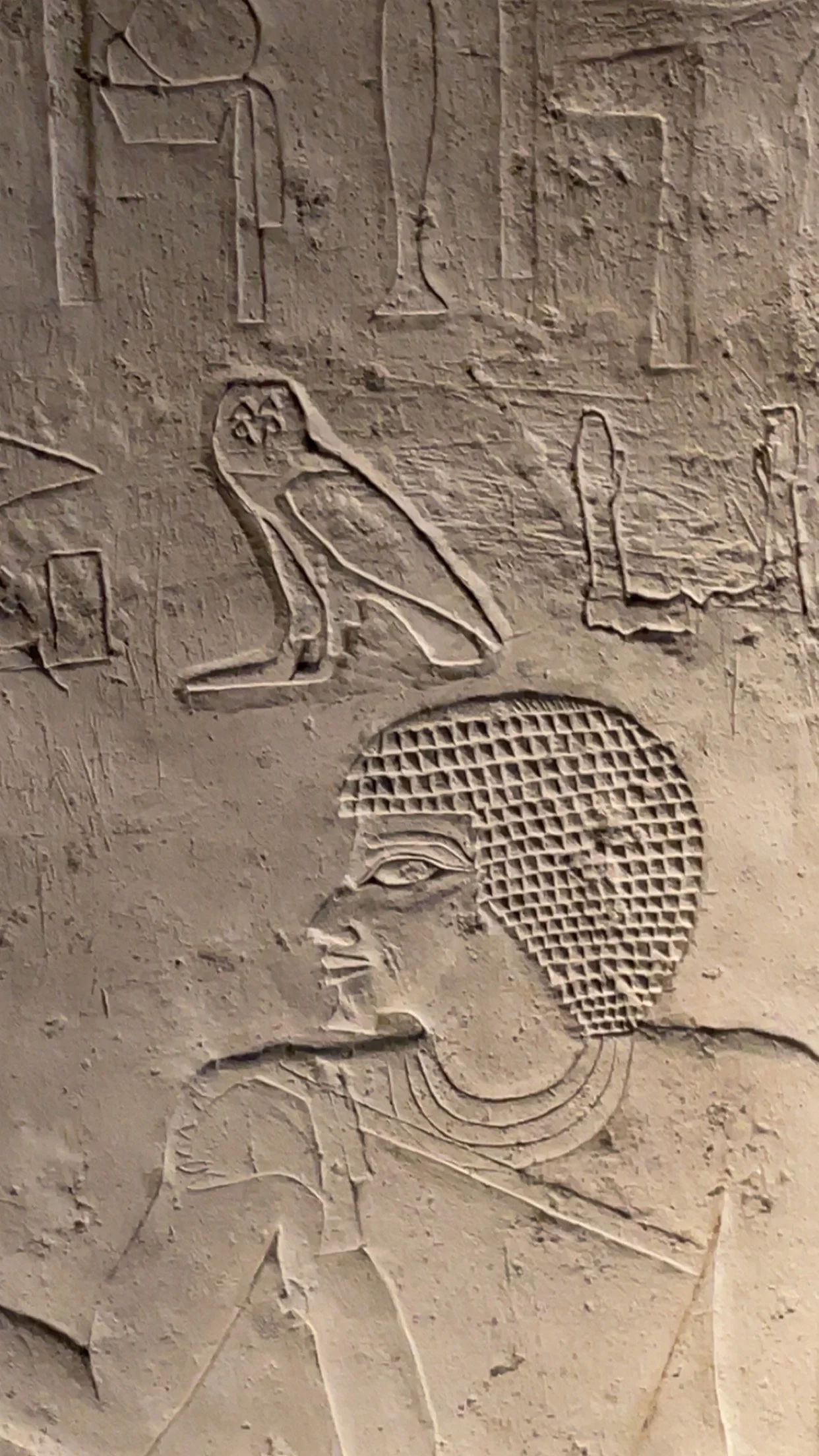
Ancient Egyptians associated owls with the passage to the underworld which was a continuation of the soul after the human body expired.
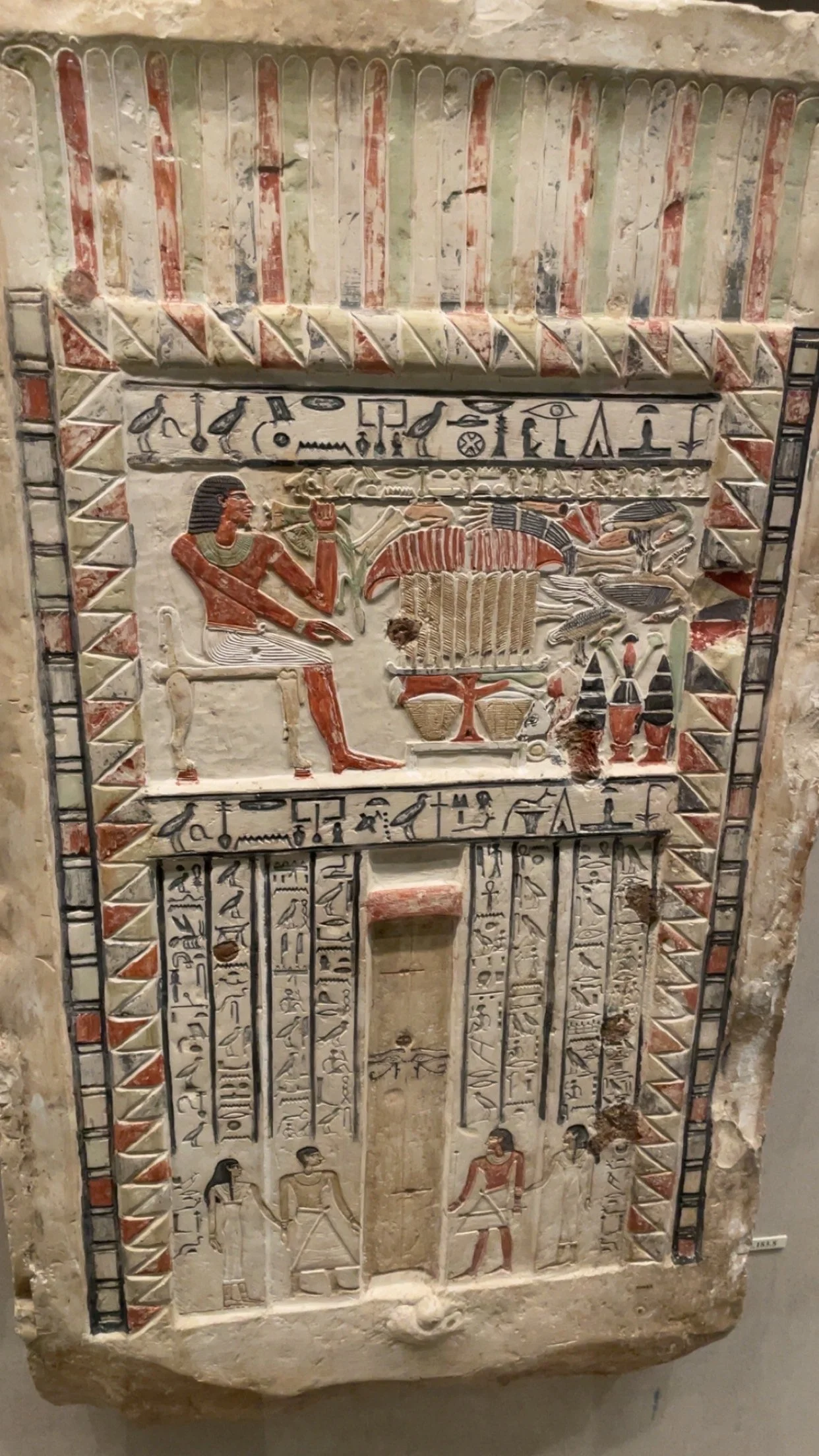
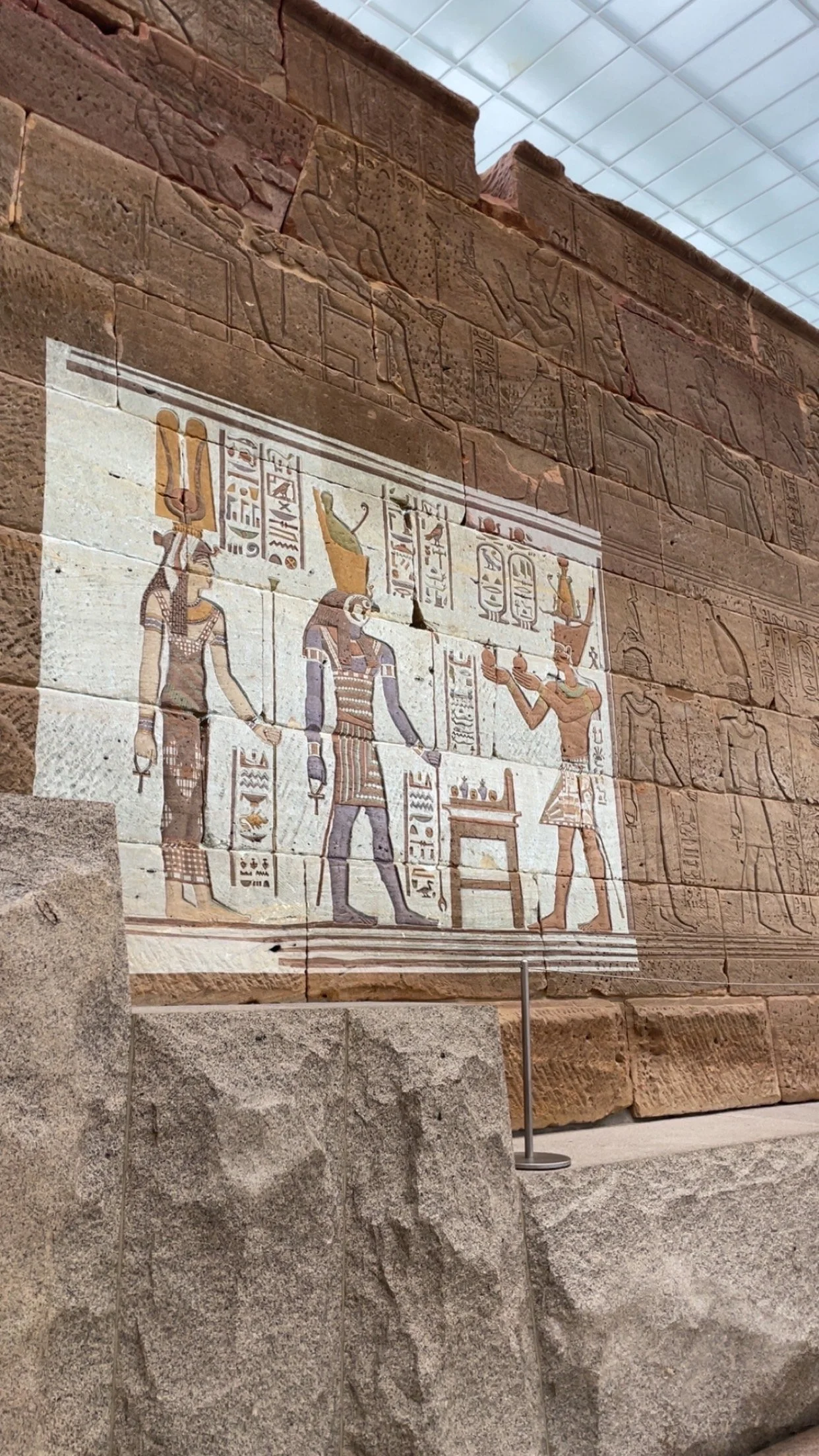
I recently discovered that a lovely coworker of mine, Amy B., has a PhD in Egyptology, worked for the Metropolitan Museum of Art and the Smithsonian, and is an occasional tour guide to Egypt. She offered me a guided tour of the Egyptian art at the Met in New York City, and, after I melted into a puddle of euphoria, I jumped at the offer on the first free weekend we shared.
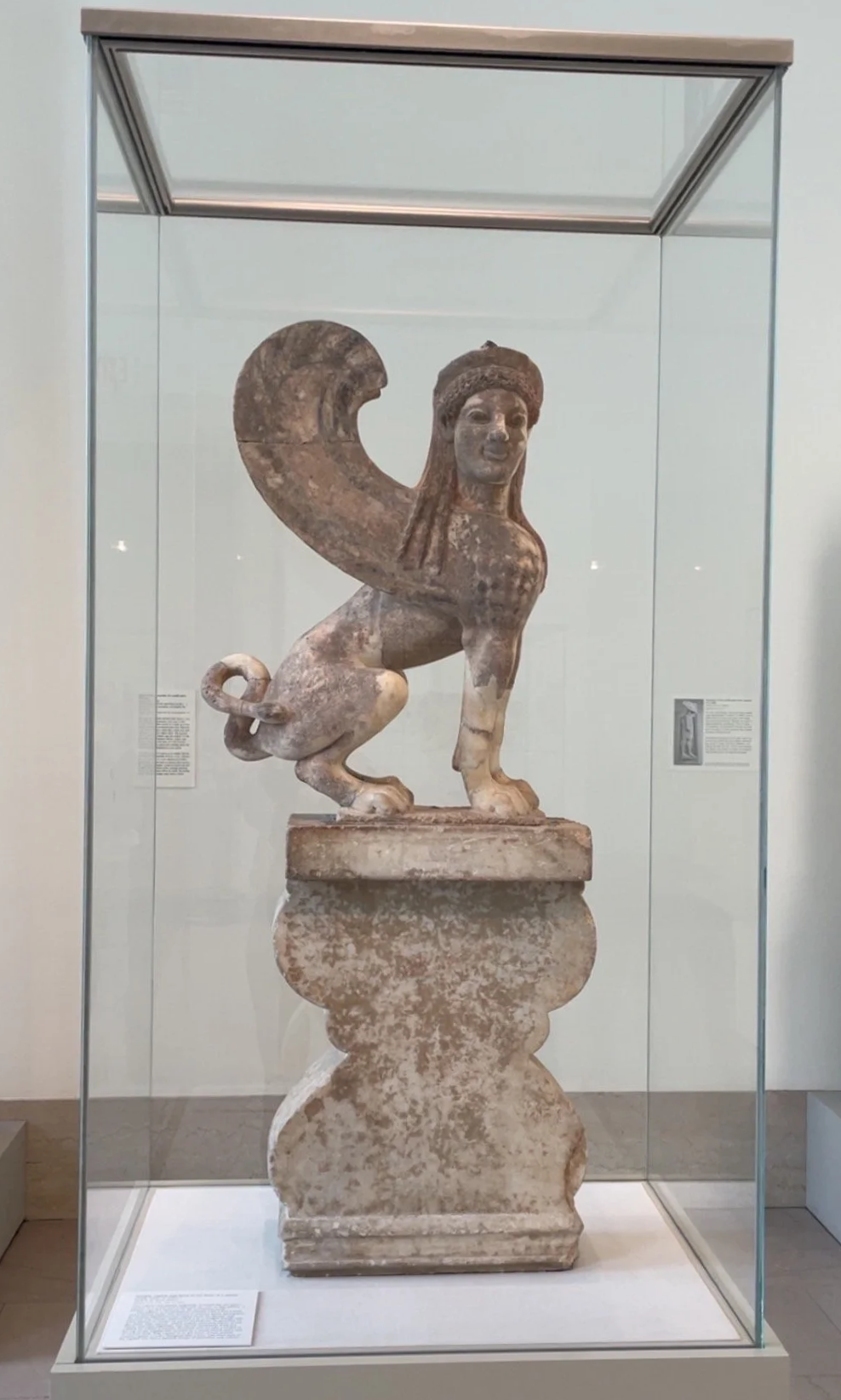
Little did Amy know that I would drag her around to find other owl-related artifacts along with every Vermeer painting on display.
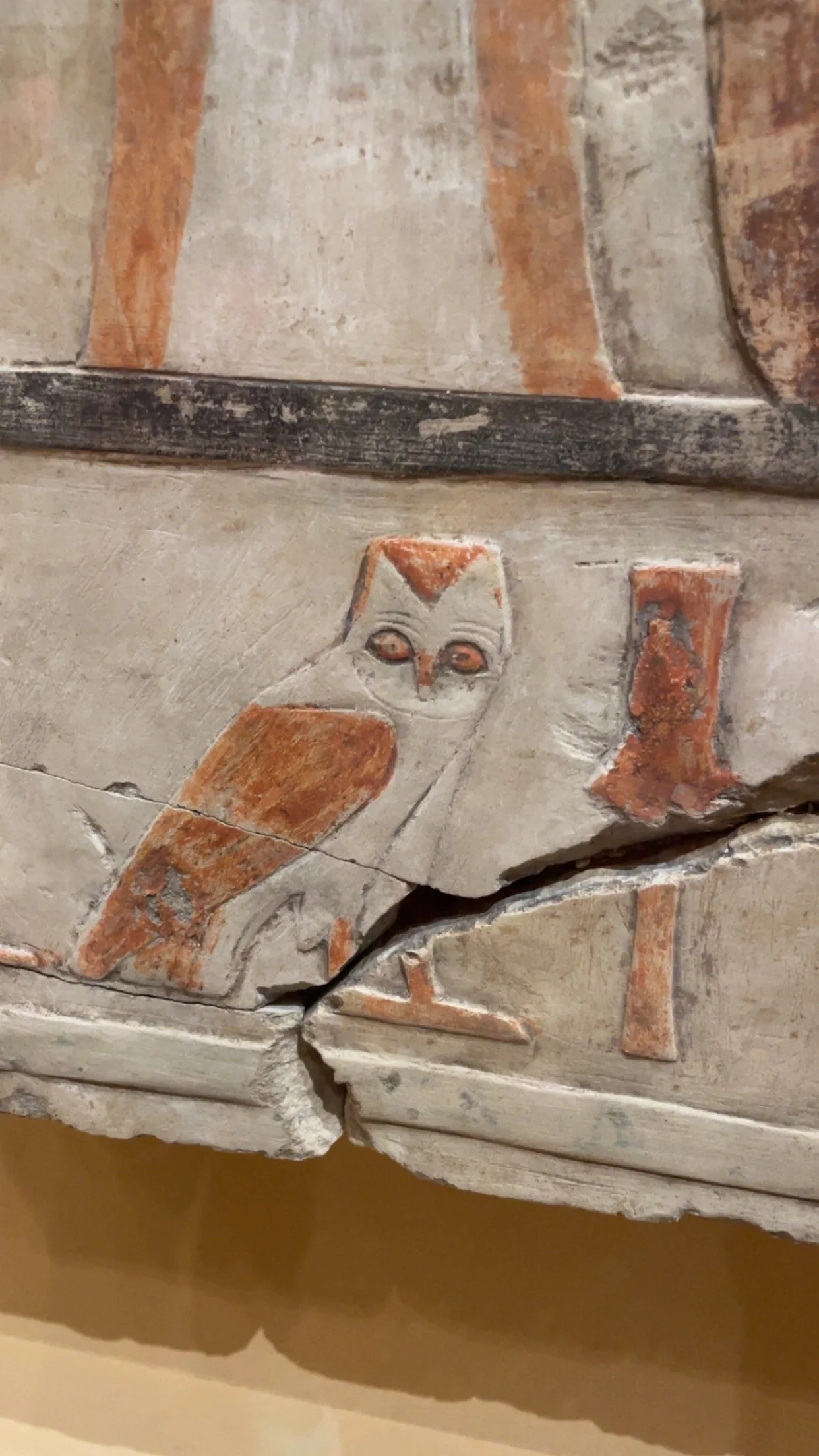
Amy was a good sport and navigator. She explained that in hieroglyphs, owls appear frequently and neutrally as a preposition. They were integral in the lives of the Egyptians of the past (who also invented the spreadsheet).
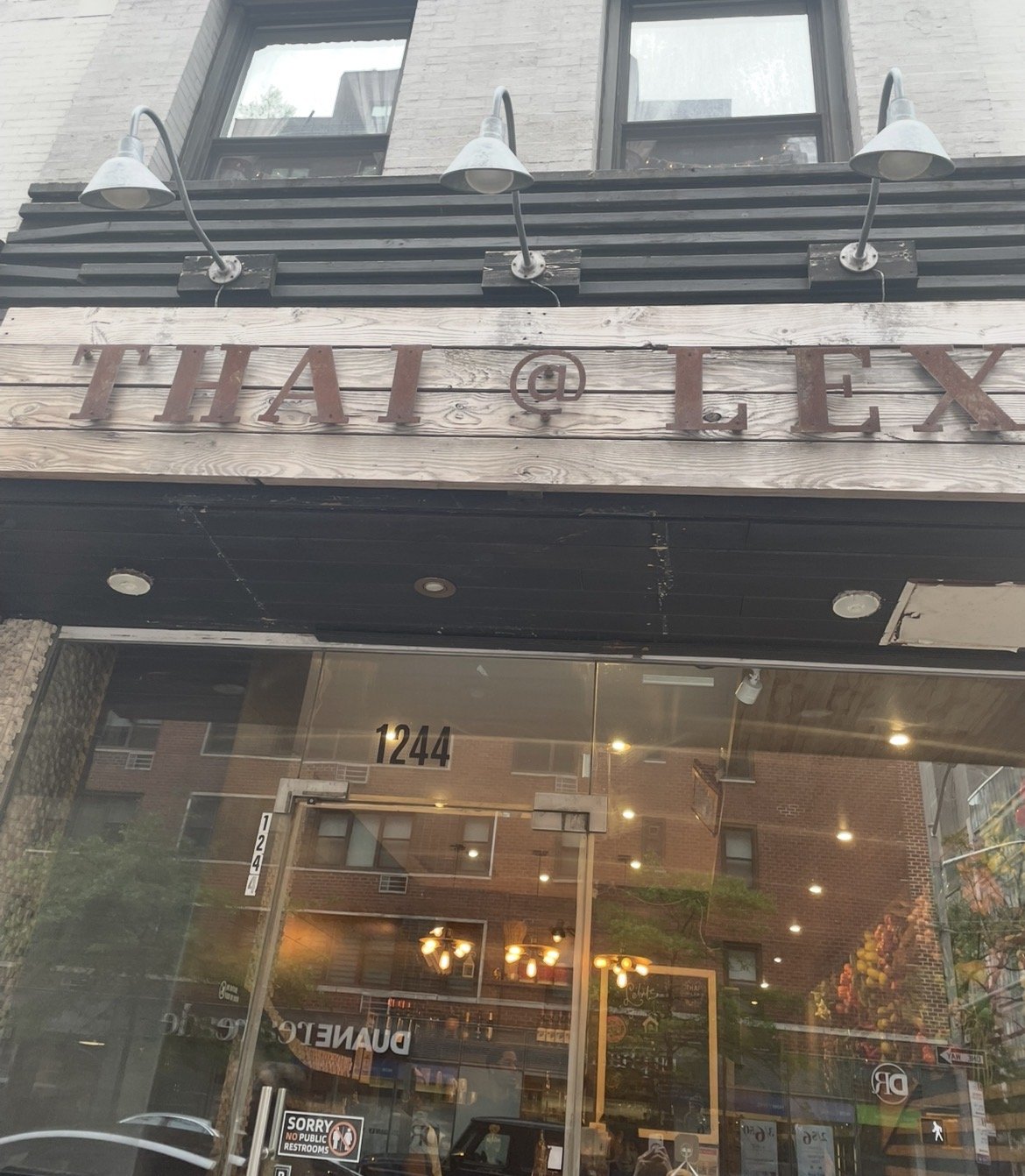
We closed out the afternoon with some of the best Thai food in my memory.
(If I am honest, I think about the pad see eiw more than the Vermeers.)
After all the research, reading, photos, and travel, my personal belief is cemented that owls bear good omens.
Without them, would there have been a special tour of the Met and a fantastic lunch with a new friend?
Here’s hoping for more omens of good fortune for all of us.